
AC vs DC charging: what's the difference?
AC and DC EV charging compared: speed, charging time, installation cost and electrical load, with advice on which suits condominiums and residences.
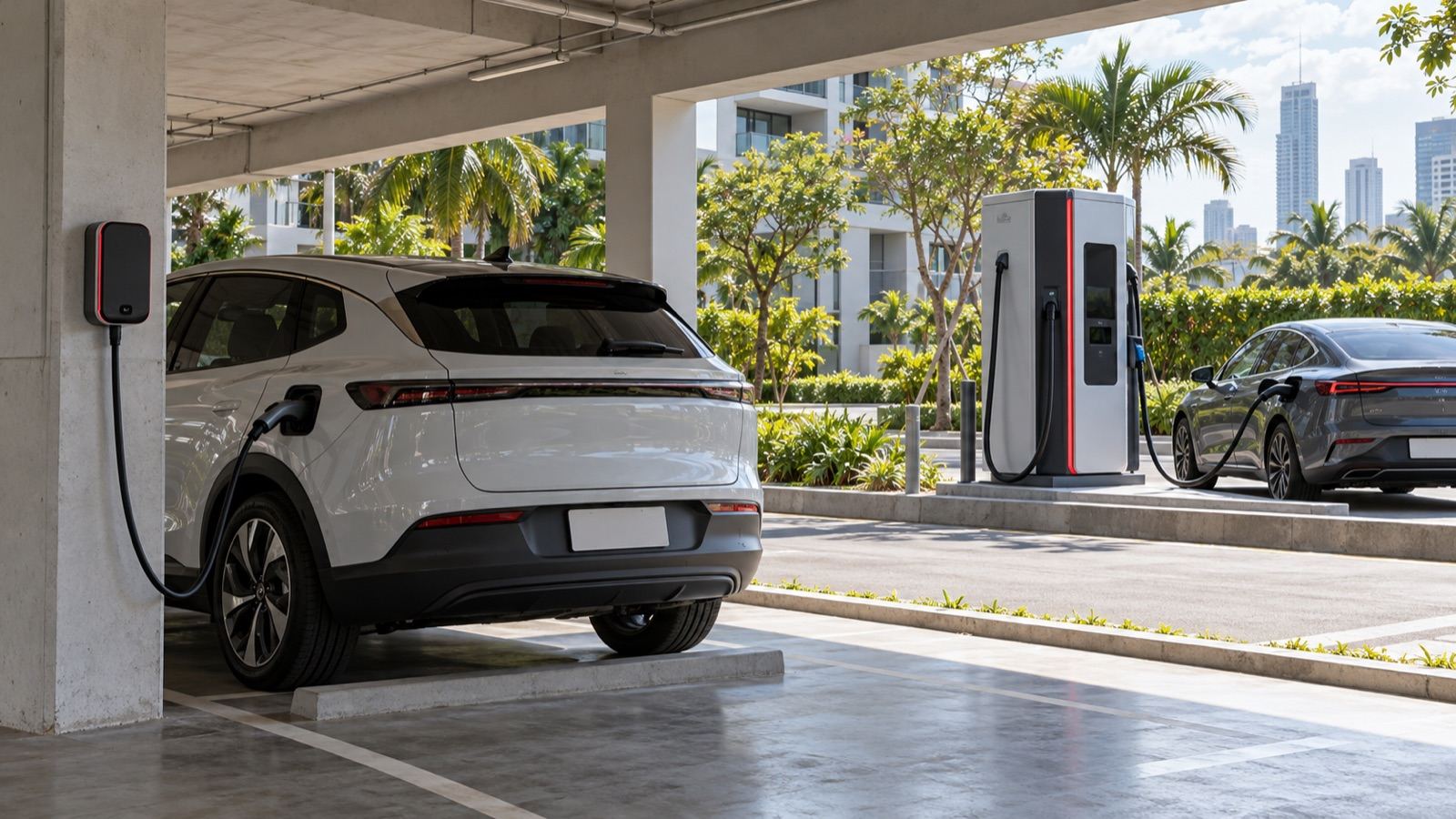
An EV battery stores direct current (DC), but the grid supplies alternating current (AC). The difference between AC and DC charging comes down to where the conversion happens, and that affects speed, cost and which buildings each one suits.
How AC charging works
An AC charger sends alternating current to the car, and the car's on-board charger converts it to DC for the battery. So the car sets the speed limit. Many cars accept around 7 kW on single-phase power and 11 kW or 22 kW on three-phase. The 22 kW AC chargers EVC installs deliver whatever each car can take (more on charging times).
How DC charging works
A DC charger has a large power converter inside and feeds direct current straight into the battery through a CCS2 connector, from around 30 kW to several hundred kW depending on the charger and car. It suits topping up during a journey, at places like petrol stations and shopping malls.
AC vs DC compared
| AC | DC | |
|---|---|---|
| Where power is converted | In the car (on-board charger) | In the charger |
| Typical charging power | About 7–22 kW (as the car allows) | About 30 kW to several hundred kW |
| Connector in Thailand | Type 2 | CCS2 |
| Best for | Homes, condos, workplaces (long stays) | Roadside stations (short stops) |
| Equipment and installation cost | Much lower | Several times higher |
| Load on the building's electrical system | Low | Very high |
How long does AC charging take?
A rough estimate is energy needed (kWh) ÷ charging power (kW). For example:
- A 40 km daily commute uses about 6–8 kWh, which takes about 1 hour on a 7 kW AC charger.
- Filling a 60 kWh battery from nearly empty on 7 kW AC takes about 8–9 hours, which fits an overnight stay.
Real times depend on the car, temperature and battery level, since cars slow down near full to protect the battery.
Which should a condo choose?
For condos, AC is the better choice in almost every case. Residents already park for hours, the building's electrical system can support it without a major upgrade, and the budget for one DC charger covers several AC charging points. That's why EVC installs mainly AC chargers in condos. Read about safety in what are IEC 61851 and TIS 62196.
Frequently asked questions
Does a 22 kW charger charge every car at 22 kW?
No. A car can't charge faster than its on-board charger allows. Many cars accept around 7–11 kW on AC, and a 22 kW charger delivers whatever each car can take.
Does charging on AC every night wear out the battery?
AC is slow charging and heats the battery less than DC fast charging, so most carmakers recommend AC for everyday charging, with a daily charge limit set as the owner's manual suggests.
Should a condo install DC chargers?
Usually not. Residents park overnight, so AC is enough. DC is expensive and needs a lot of power, which most buildings can't supply without a major electrical upgrade.
Sources and standards
- IEC 61851-1:2017 – Electric vehicle conductive charging system, Part 1: General requirements
- IEC 62196-2:2022 – AC charging connectors (Type 2), Part 2
- IEC 62196-3:2022 – DC and AC/DC charging connectors (CCS2), Part 3
- มอก. 62196 เล่ม 2-2566 (TIS 62196-2, identical to IEC 62196-2:2022)
Newsletter
Get new articles by email
EV charging know-how for condos and buildings, every two weeks.
Related articles
What are IEC 61851 and TIS 62196?
The charger and plug safety standards every condo should check before installing
Read more →
How to get started with EV chargers in your condo
Every step from site survey and electrical design to opening for residents, with zero investment from the condo
Read more →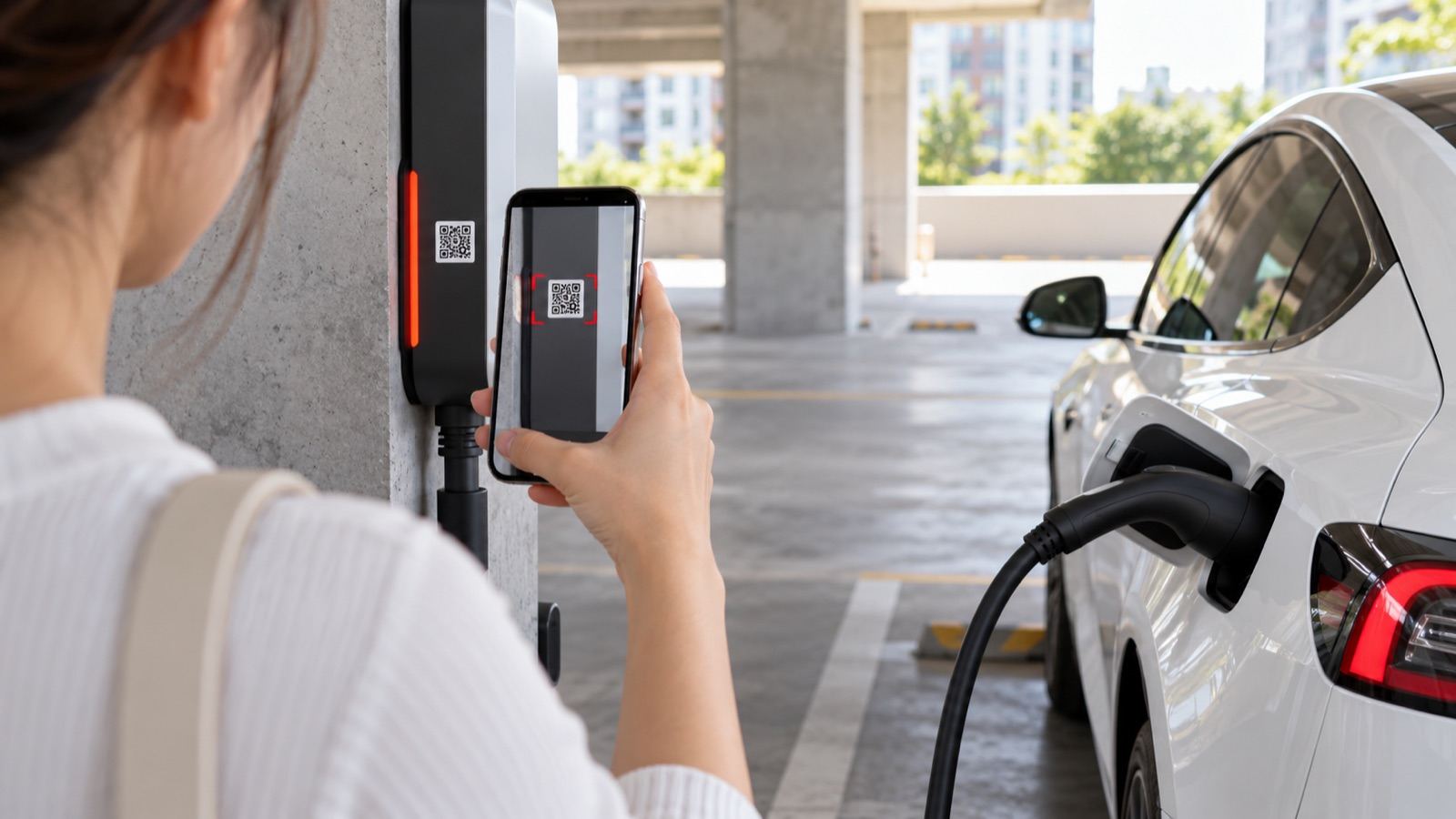
Charging with the Galvanic app, step by step
Scan a QR code, start or stop charging, and pay with PromptPay or credit card
Read more →