
7 questions a condo committee should ask before choosing an EV charging provider
7 questions condo committees should ask every EV charging provider: experience, standards, ownership, payment app, overstay fees and maintenance.

Many charging providers offer "zero investment" or a very low installation price, but what you actually get differs a lot: safety, payment collection and support after installation. This article lists the questions a condo committee should ask every provider, why each one matters, and EVC's answers, so you can compare like for like.
The signed contract is what applies. This article is a guide for evaluation only.
7 questions to ask every provider
-
Have you installed charging stations in condos before, and where?
Why ask: Condos run on a shared electrical system, need approval under the condominium's rules, and serve many residents. Providers without that experience often miss parts of the electrical planning and shared use.
EVC: We have built charging stations for condos and buildings since 2021, with 100+ stations nationwide. Projects include The Parkland Charan-Pinklao (1,784 units), Supalai Loft Talat Phlu (879 units), The Clover Thonglor, Lumpini Condotown Ekkachai 48 and organizations such as SCG Packaging.
-
What standards do the equipment and installation meet, and who designs it?
Why ask: Uncertified chargers, or wiring without a dedicated circuit and the right residual current protection for EVs, risk electric leakage, overheating cables and fire in the car park.
EVC: Our chargers are certified to IEC 61851-1 and IEC 62196, with electrical equipment certified to TIS and/or IEC. Stations are designed and installed to the EIT standard by licensed electrical engineers, each with a dedicated circuit, a Type B residual current breaker per charger, an emergency stop button and a fire extinguisher (see all safety systems).
-
Who owns the equipment, and who pays for everything?
Why ask: Some offers look cheap at first, but the condo ends up paying for chargers, installation or repairs later.
EVC: EVC invests 100% in the chargers, electrical system and app, and owns the equipment. Once approved, the juristic person invests nothing.
-
How do residents charge and pay? Does the juristic person collect money?
Why ask: Without a payment system, the juristic person has to read meters, split electricity by unit, collect money and handle complaints.
EVC: Residents scan a QR code and pay in the Galvanic app with PromptPay or a credit card. The juristic person doesn't collect money or read meters (see how the app works).
-
What happens when residents leave their cars after charging?
Why ask: With a limited number of chargers, cars left after a full charge block other residents and become disputes the juristic person has to handle.
EVC: The app can charge an overstay fee after charging finishes, on terms agreed with the juristic person, so the bays keep turning over for everyone.
-
Who sets the charging price, and what is the revenue share based on? Can we check it?
Why ask: If the provider can change prices at will, or the share is calculated on an unclear basis, the juristic person can't verify its income.
EVC: EVC sets and adjusts the rate with the juristic person's approval and advance notice to users, based on actual electricity costs and nearby AC charger prices. The share is calculated after the payment gateway fee stated in the proposal, split by the contract ratio, and paid monthly with a report of actual usage.
-
Who looks after the chargers, who repairs faults, and is it insured?
Why ask: Chargers are used every day. Someone has to inspect and repair them; the juristic person shouldn't have to find a technician.
EVC: Technicians inspect every 4–6 months for the whole contract. Repairs and replacements from normal use are entirely EVC's responsibility, and damage caused by a charger fault is covered by insurance, subject to the policy terms. Residents report problems to the Galvanic call center on 093-164-7993, 24 hours a day.
Cheap can cost more in the long run
A condo charging station is not the same as a charger in a house. It runs on the building's shared electrical system, must follow the condominium's regulations, and is used by many residents every day. A contractor with no condo experience, uncertified low-cost equipment or no payment system can leave the juristic person carrying both the safety risk and the day-to-day admin after installation.
| # | Topic | Typical installation contractor | EVC |
|---|---|---|---|
| 1 | Condo experience | May have done only houses or factories; unfamiliar with shared electrical systems and condo rules | EV charging for condos and buildings since 2021 |
| 2 | Equipment and standards | Risk of cheap, uncertified chargers or tapping into existing circuits | Chargers certified to IEC 61851-1 and IEC 62196, installed to the EIT standard by licensed engineers, with a dedicated circuit and Type B residual current breaker |
| 3 | Condo investment | The condo usually pays for chargers and installation | Zero, once approved |
| 4 | Collecting payment | The juristic person reads meters and collects money | Residents pay in the Galvanic app with PromptPay or credit card |
| 5 | Cars left after charging | No tools to manage it | Overstay fees can be set in the app |
| 6 | Reporting and transparency | Usually no usage data | Monthly report of actual usage and revenue share |
| 7 | After installation | Job usually ends at handover | Inspections every 4–6 months, repairs from normal use by EVC, insurance and a 24-hour call center |
Who is responsible for what
| EVC | Juristic person / property owner | Residents |
|---|---|---|
| Invests 100% in chargers, electrical system and app, and owns the equipment | Provides the installation space (parking bays) | Pay for charging in the app |
| Surveys, designs and installs to the EIT standard | Pays for the electricity actually used | Use the chargers as instructed |
| Maintains everything for the whole contract, with a 24-hour call center | Keeps the area around the chargers safe to use | Report problems to the call center |
| Pays revenue monthly with a report, and trains building staff before launch | Doesn't install EV chargers with another company for the contract term |
The last point for the juristic person, exclusivity for the contract term, is worth understanding from the start, since EVC pays for all the equipment.
Can we add chargers if usage grows?
The juristic person can request more chargers once usage reaches the threshold agreed in the contract. For chargers beyond that, EVC will install more at the market price at the time of the request.
From agreement to launch
- Site survey: free and without commitment, by EVC's engineers
- Electrical design: a plan that suits the building
- Contract signing: revenue share and all terms written in
- Installation and training: 2–4 weeks on average, including training for building staff
- Launch: residents charge through the app and the juristic person gets a monthly report
For the money flow in detail, read how condos earn revenue from charging stations, or book a free site survey to see a draft contract. The EVC team will walk your committee through every term before you decide.
Frequently asked questions
How is EVC different from hiring an installation contractor?
A typical contractor has the condo pay for the chargers and installation and finishes when the job is handed over; the juristic person then collects money from residents and looks after the chargers. EVC pays for everything, installs to the standards with licensed electrical engineers, collects payment through an app with monthly reports, and maintains the chargers for the whole contract.
What if residents leave their cars after charging is finished?
EVC's app can charge an overstay fee after charging finishes, on terms agreed with the juristic person, so residents move their cars and the bays stay available for others.
What is the juristic person's revenue share calculated on?
Residents pay in the app; the payment gateway fee stated in the proposal is deducted; the rest is split by the contract ratio. EVC pays monthly with a report of actual usage.
Sources and standards
- IEC 61851-1:2017 – Electric vehicle conductive charging system, Part 1: General requirements
- IEC 62196-2:2022 – AC charging connectors (Type 2), Part 2
- MPESTD-001:2563 (กฟน. / กฟภ. / กกพ.) มาตรฐานการติดตั้งทางไฟฟ้าสำหรับบริภัณฑ์จ่ายไฟยานยนต์ไฟฟ้า สำหรับบ้านอยู่อาศัย อาคารชุด และอาคารสำนักงาน
- มาตรฐานการติดตั้งทางไฟฟ้าสำหรับประเทศไทย (วสท. / EIT Thai Electrical Code)
Newsletter
Get new articles by email
EV charging know-how for condos and buildings, every two weeks.
Related articles

How condos earn revenue from charging stations
Understand the zero-investment model and monthly revenue share with reports
Read more →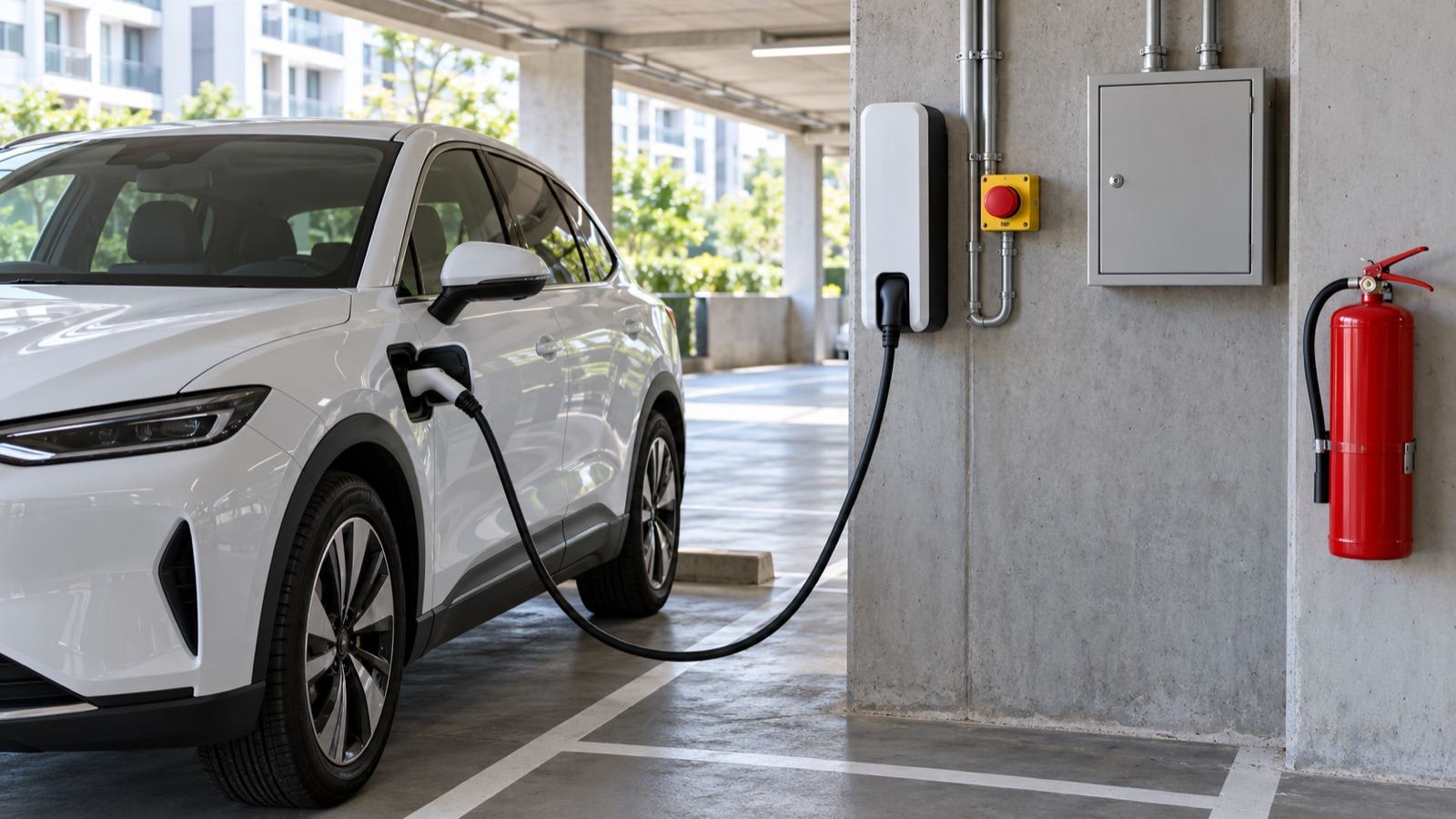
Safety systems at a condo EV charging station
Dedicated circuit, Type B breakers, three cut-off points and on-site safety equipment
Read more →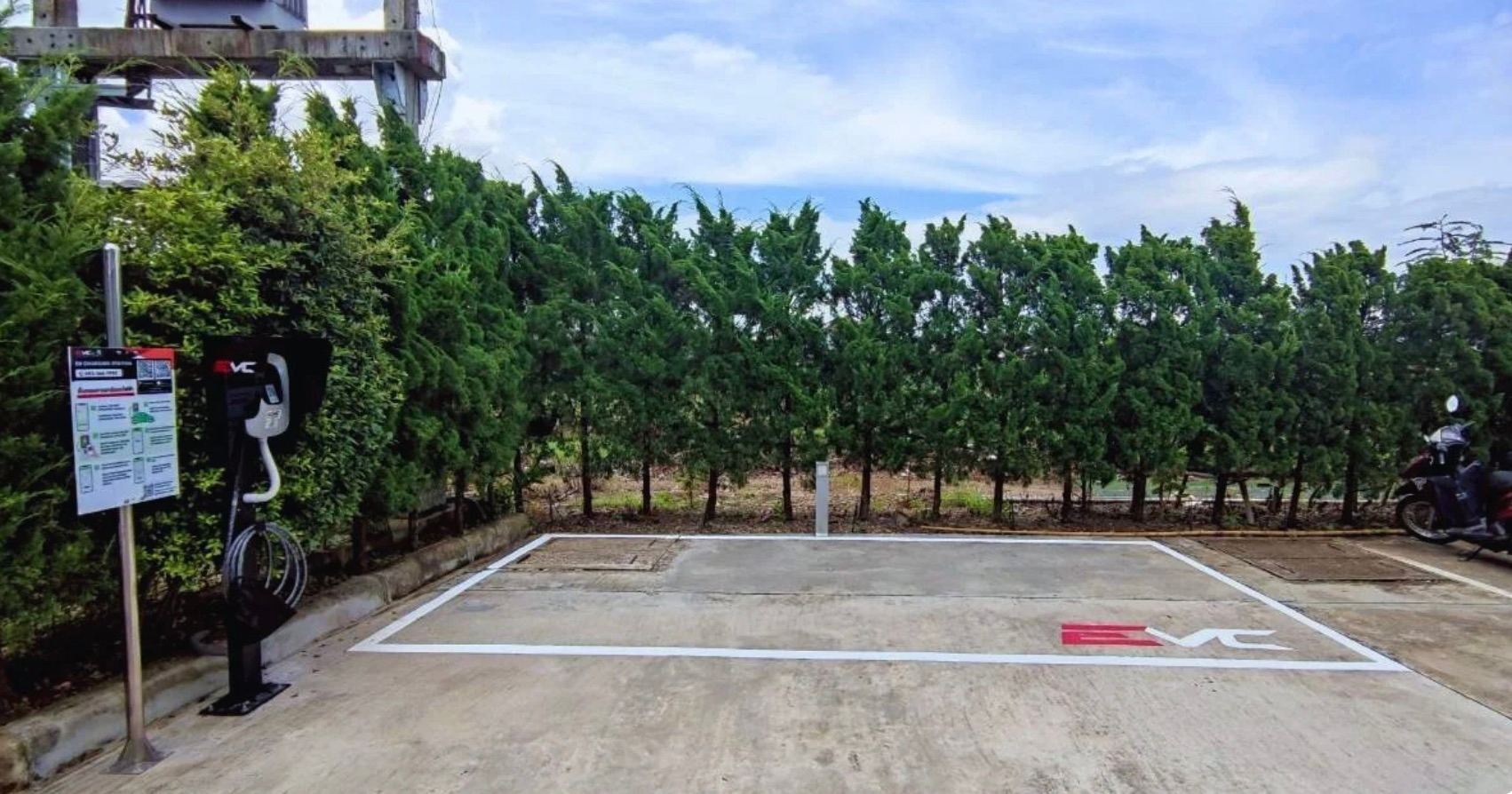
How to get started with EV chargers in your condo
Every step from site survey and electrical design to opening for residents, with zero investment from the condo
Read more →